English
 日本語
日本語 Deutsch
 عربى
عربى 中文
中文

Roof Solar Mounting Systems: The Complete Racking Guide
 2026.08.13
 Industry News
What Is a Roof Solar Mounting System?
If you are quoting a warehouse with a TPO roof, a farm building with a standing-seam metal roof, and a home with concrete tile, the same racking plan will not work for all three. The roof solar mounting system determines whether the installation performs for decades or leaks, rattles, and lifts off in high wind. With racking typically accounting for roughly 10 percent of installed system cost, the choice also affects project economics.
A roof solar mounting system is the structural framework that holds solar panels to a building roof. It transfers module weight plus wind and snow loads into the roof structure. Nearly every modern roof racking system consists of three core components: roof attachments, mounting rails, and module clamps. Roof attachments, such as flashing hooks, ballasted bases, or clamp-on brackets, connect the racking to the roof without compromising the roofing membrane. Mounting rails create a continuous support plane across the attachments. Module clamps lock the panels in place while allowing thermal expansion.
The key difference between roof racking and ground racking is that a roof system must work around an existing structure and its waterproofing layer. That single constraint drives the most important decision in the project: penetrate the roof or avoid penetration entirely.
Suneast Solar offers a full line of roof solar mounting systems for both flat and pitched roofs, so you can base your choice on technical fit rather than on whatever one product a supplier happens to stock.
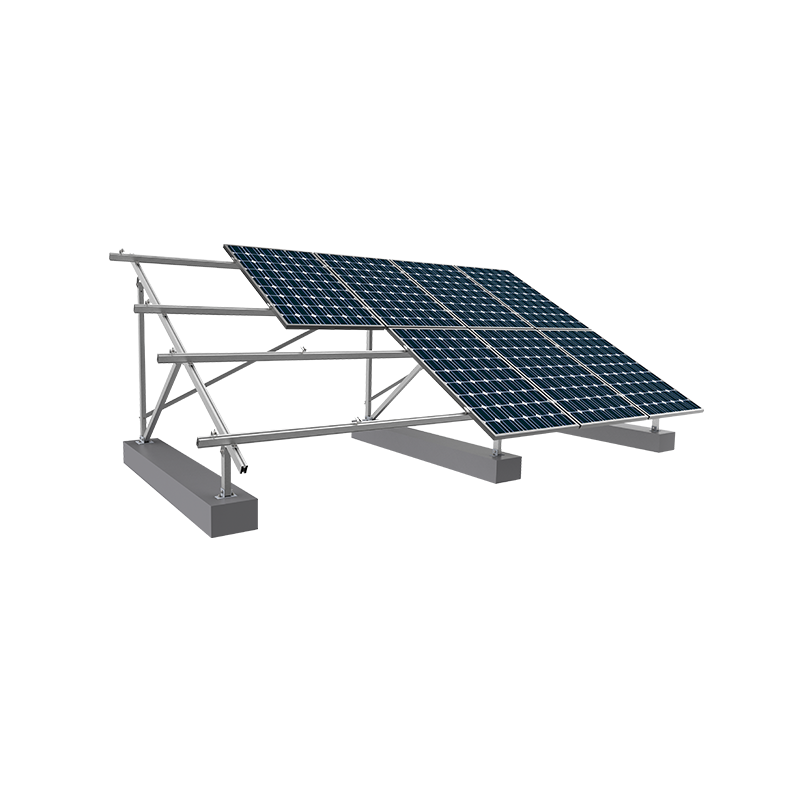 OEM/ODM Roof Solar/PV Mounting Systems Suppliers, FactoryAs China roof solar mounting systems suppliers and factory, Taizhou Dongsheng New Energy Technology Co., Ltd. offers OEM/ODM roof PV moun...View Product →
Main Types of Roof Solar Mounting Systems
Roof mounting systems are best understood by asking two questions: What is the roof structure? And what is the roof covering material? The first question separates flat roofs from pitched roofs. The second question decides which attachment method is safe and waterproof for that specific roof.
Flat Roof Mounting Systems
Flat roofs are common on commercial and industrial buildings and on some residential additions. The main choice is between non-penetrating ballasted systems and penetrating anchored systems. Each has a different structural logic and different risk profile.
A non-penetrating system uses concrete blocks or metal ballast trays to hold the array down by weight. Because nothing punctures the membrane, this is the preferred option when the roofing warranty forbids penetrations or when the roof deck can accept a distributed load. The tradeoff is weight: overturning resistance depends on ballast mass, wind speed, building height, and array position. For a closer look at this approach, see non-penetrating roof mounting systems.
A penetrating system uses roof attachments bolted or chemically anchored into the structure beneath the membrane. It provides higher uplift resistance because the racking is mechanically tied to the building. The cost is that every penetration becomes a waterproofing point that must be flashed and sealed correctly. This approach makes sense on flat roofs where wind loads are high, where ballast weight is not acceptable, or where the structure cannot carry a heavy dead load. Compare it with penetrating roof mounting systems when wind resistance is a priority.
| Factor | Non-penetrating ballasted | Penetrating anchored |
|---|---|---|
| Attachment principle | Concrete blocks or ballast trays hold the array down by weight | Roof attachments fixed with expansion bolts or chemical anchors |
| Best suited for | Roofs where the membrane must not be punctured | Roofs where structural anchoring is allowed and wind loads are high |
| Wind uplift resistance | Depends on ballast weight, wind speed, and building height | Higher, because the racking is mechanically tied to the structure |
| Waterproofing risk | Low, since the membrane stays intact | Moderate; every penetration needs careful flashing and sealant |
| Installation speed | Fast and modular | Slower due to anchor placement, curing, and sealing |
For a complete view of both categories, see flat roof PV mounting options.
Custom Flat Roof PV Mounting System Manufacturers, SuppliersAs China Flat Roof PV Mounting system manufacturers and Flat Roof PV Mounting suppliers, Taizhou Dongsheng New Energy Technology Co., Ltd...View Product →
Pitched Roof Mounting Systems by Roof Material
On pitched roofs, the attachment type must match the roof covering. Using a solution designed for a different material is the most common source of leaks, corrosion, and failed inspections. Suneast Solar's product line reflects the three main roof material categories.
Metal roofs. Standing-seam metal roofs allow clamp-on attachments that require no penetration, making them fast to install and easy on roofing warranties. Corrugated or screw-down metal panels usually call for a screw-down bracket with a gasket and flashing because there is no raised seam to clamp to. Confirm the profile depth and seam geometry before ordering. Explore metal roof solar mounting details for the most common metal panel types.
Tile roofs. Concrete and clay tiles require tile hooks that sit under the tiles and transfer loads to the rafters. The installer removes one tile in the attachment zone, fixes the hook to the batten or rafter, then re-fits a cut tile around the bracket. Flashing integrated with the hook directs water away from the penetration. Because tiles are brittle, the detail must also avoid point loads on unbroken tiles. See tile roof solar mounting systems for the full configuration.
TPO roofs. TPO is a single-ply membrane common on commercial low-slope and some pitched roofs. It is sensitive to punctures, so the recommended method is an adhesive-attached or heat-welded mounting plate bonded to the membrane surface. The plate becomes part of the waterproofing layer without mechanical fasteners in most configurations, which preserves the membrane warranty and eliminates the leak path common in screw-penetrated TPO. Review TPO roof mounting solutions before closing a commercial quote.
| Roof material | Recommended attachment | Key requirement |
|---|---|---|
| Standing-seam metal | Clamp-on bracket | Match the seam profile; no penetration needed |
| Corrugated or screw-down metal | Screw-down bracket with rubber gasket and flashing | Use the correct fastener length and sealing washers |
| Concrete or clay tile | Tile hook with integrated flashing | Remove one tile, fix the hook to structure, re-fit a cut tile |
| TPO single-ply membrane | Adhesive or heat-welded mounting plate | Keep the membrane continuous; verify warranty approval |
To compare all pitched roof configurations, see pitched roof PV mounting solutions.
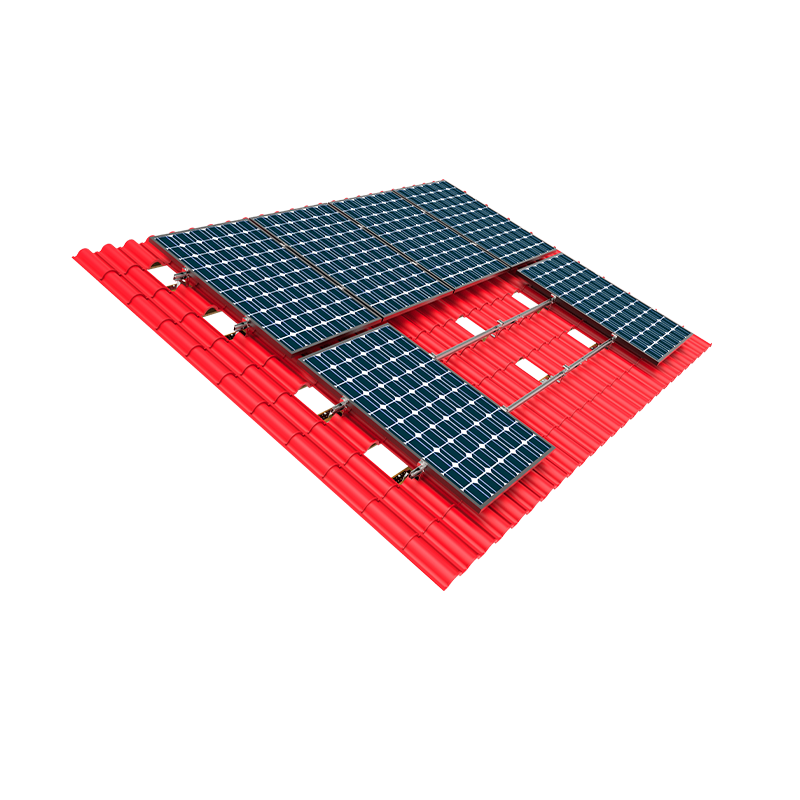 Custom Pitched Roof PV Mounting System Manufacturers, SuppliersAs China Pitched Roof PV Mounting system manufacturers and Pitched Roof PV Mounting suppliers, Taizhou Dongsheng New Energy Technology Co...View Product →
How to Choose the Right Roof Mounting System: A Decision Framework
Use this sequence when evaluating any roof project. It narrows the options to one correct racking category before you compare price between manufacturers.
- Confirm the roof type and the exact covering material, including the metal seam profile or tile type.
- Evaluate the roof structure. Can it accept the added dead load of ballast, or the localized loads of anchored attachments?
- Calculate the design wind speed and exposure conditions for the site. Uplift forces often determine whether ballast weight is viable.
- Check the roof warranty. Many membrane warranties void if contractors penetrate without an approved flashing detail.
- Compare installation speed and labor cost. Ballasted systems are typically faster; penetrating systems take longer but reduce weight.
A common mistake is assuming a heavy building can carry any racking. The real question is whether the specific roof deck and framing can carry the localized load at each attachment point. Another frequent error is mixing attachment styles across the same array, which creates different deflection behavior and can break clamps or damage panels.
Key Quality Factors to Evaluate in Roof Racking Systems
The hardware itself should be judged on five factors before purchase. These determine long-term performance more than any single feature.
- Corrosion protection. Anodized aluminum suits most roof environments and keeps weight low. Hot-dip galvanized steel provides extra strength in heavy snow regions. Confirm that fasteners, clamps, and brackets all share the same corrosion treatment.
- Engineered strength. A good racking manufacturer can supply engineering calculations for wind and snow loads. Drawings should show how loads transfer from the clamp to the roof attachment.
- Waterproofing detail. Flashing shape, gasket material, and installation sequence decide whether a roof stays dry. Products developed specifically for roofs, such as Suneast Solar's waterproof mounting system introduced in 2022, tend to have more mature waterproofing details. For projects where the panel itself must be the roof, see building-integrated PV (BIPV) mounting systems.
- Component compatibility. Clamps must match the module frame height and width. Rail spacing must match the module length and the wind-load bracing plan.
- Manufacturing quality and traceability. Look for manufacturers with ISO-certified production. According to Suneast Solar, the company holds ISO quality certification and reported supplying more than 1.5 GW of distributed-generation mounting systems in 2023.
Roof Solar Mounting System Installation Overview
A roof mounting installation follows a standardized sequence: survey the roof and verify rafter or purlin spacing; mark attachment positions; install roof attachments or place ballast; fit and level the rails; position the module clamps; set and secure the panels; torque-check every fastener; and walk through the roofing details. Regardless of system type, installation quality is as important as the quality of the aluminum.
- Marking attachments from the panel layout instead of from the actual roof structure spacing
- Overtightening clamps and distorting module frames
- Skipping the torque check after several modules have already been placed
- Sealing penetrations in a way that looks neat but does not follow the flashing manufacturer's approved detail
Use certified installers familiar with the chosen system and insist on following the manufacturer's manual. A supplier with engineering capability, like Suneast Solar, documents installation sequence and torque values, which reduces field errors and shortens project timelines.
Conclusion: Find the Right Roof Solar Mounting Solution
The selection logic is simple: the roof covering defines the attachment method, the roof structure defines whether the system can be penetrating or non-penetrating, and wind loads define the strength and weight required.
- Flat roof with no penetrations allowed: ballasted non-penetrating racking
- Flat roof with high wind loads: penetrating anchored racking
- Standing-seam metal roof: clamp-on attachments
- Corrugated metal roof: screw-down brackets with flashing
- Tile roof: tile hooks with integrated flashing
- TPO roof: adhesive or heat-welded mounting plates
Before requesting a quote, gather the roof type, approximate area, structural drawings, and local wind load requirements. Then contact a manufacturer that covers all relevant categories. Suneast Solar's lineup includes non-penetrating, penetrating, metal, tile, and TPO roof systems, so the conversation can start from your roof condition rather than from a single product family. The right roof solar mounting system is the one that matches your roof's material, structure, and load conditions, and with a complete product line, you rarely need to compromise.
Message Us Now !

 +86-0523-80509588

 11th Floor, Wenchuang Building, 60 Fenghuang East Road, Hailing District, Taizhou City, JiangSu, China
Mounting Systems
Copyright © Taizhou Suneast New Energy Technology Co., Ltd.
All Rights Reserved.
 OEM/ODM Solar Panel Mounting Bracket Manufacturers