English
 日本語
日本語 Deutsch
 عربى
عربى 中文
中文

How to Choose the Right Solar Panel Mounting Bracket: Types, Materials, and Selection Tips
 2026.08.20
 Industry News
A 400 W panel is only as safe as the bracket beneath it. Rusted fasteners, undersized rails, or a clamp made for a different frame thickness can turn a rooftop array into a maintenance problem within five years. The bracket has to carry wind uplift, snow, and panel weight into the structure while keeping the roof dry.
The short answer: choose a bracket after matching the roof or ground condition, verifying load ratings, and checking material quality. This guide explains the main bracket types, material choices, and selection steps for solar panels on residential and commercial projects.
What Does a Solar Panel Mounting Bracket Do?
A mounting bracket is the mechanical link between the solar module frame and the roof or ground structure. It fixes the panel tilt and row spacing, transfers gravity loads, and resists wind uplift. The bracket also preserves the roof covering by keeping water away from fastener openings.
The main functions are:
- Hold modules at the designed angle and aligned row spacing.
- Transfer dead weight, snow load, wind pressure, and seismic forces to the supporting beams, rafters, piles, or ballast.
- Provide a reliable grounding path between modules and the inverter earth.
- Protect the building envelope with flashing, sealants, and standoff heights.
A bracket tested for a 200 km/h wind gust is not automatically safe on every roof. The rafter spacing, roof age, and local exposure still determine the final load path.
Common Types of Solar Panel Mounting Brackets
The correct bracket depends on the support surface, module orientation, and site constraints. Most projects fall into three categories.
Roof Mounting Brackets
Roof systems are grouped by covering type and by whether the roof can be penetrated. On a flat commercial roof that must stay watertight, a non-penetrating flat roof mounting system uses ballast blocks and wind deflectors instead of through-bolts. On pitched tile roofs, hooks replace the tile around the fixing point; on metal roofs, clamps attach to the standing seam without drilling. The bracket spacing must match the rail span and the module dimensions.
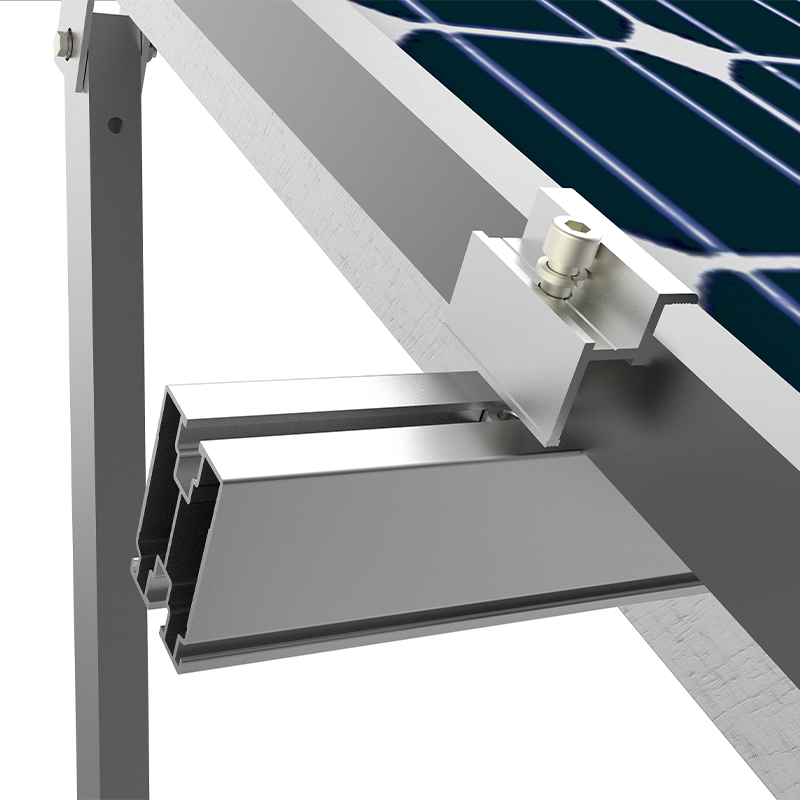 Wholesale Non-penetrating PV Mounting Factory, Manufacturers - Taizhou DongshengTaizhou Dongsheng New Energy Technology Co., Ltd is China wholesale Non-penetrating PV Mounting manufacturers and Non-penetrating PV Moun...View Product →
Ground Mounting Brackets
Ground racks use driven piles, concrete piers, or screw anchors to resist overturning. For dual-use land, an agricultural solar hybrid mounting system raises panels high enough for crops or grazing beneath. The structure must also account for weed control, cleaning access, and potential snow drift around the lower edge.
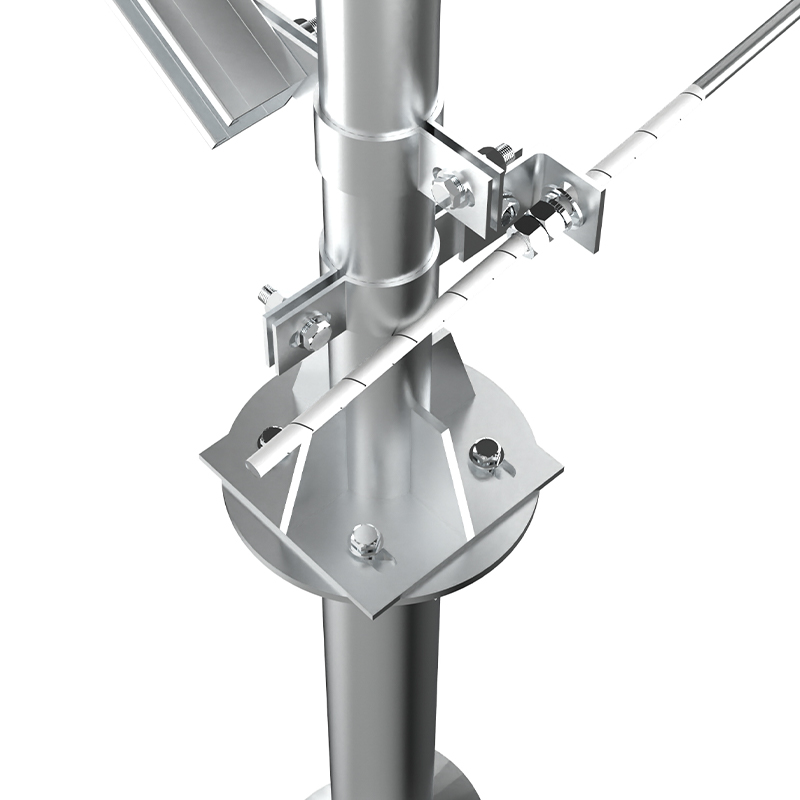 Wholesale Agricultural-solar Hybrid PV Mounting Factory, Manufacturers - TaizhouTaizhou Dongsheng New Energy Technology Co., Ltd is China wholesale Agricultural-solar Hybrid PV Mounting manufacturers and Agricultural-...View Product →
Specialized and Building-Integrated Brackets
Carports, balconies, and waterproof roof systems add a functional requirement. A carport solar mounting system must support vehicle clearance as well as panel weight, with drainage channels built into the frame. BIPV trays combine the bracket and the roof surface in one sealed layer, while balcony systems use compact rails that bolt to a parapet or railing.
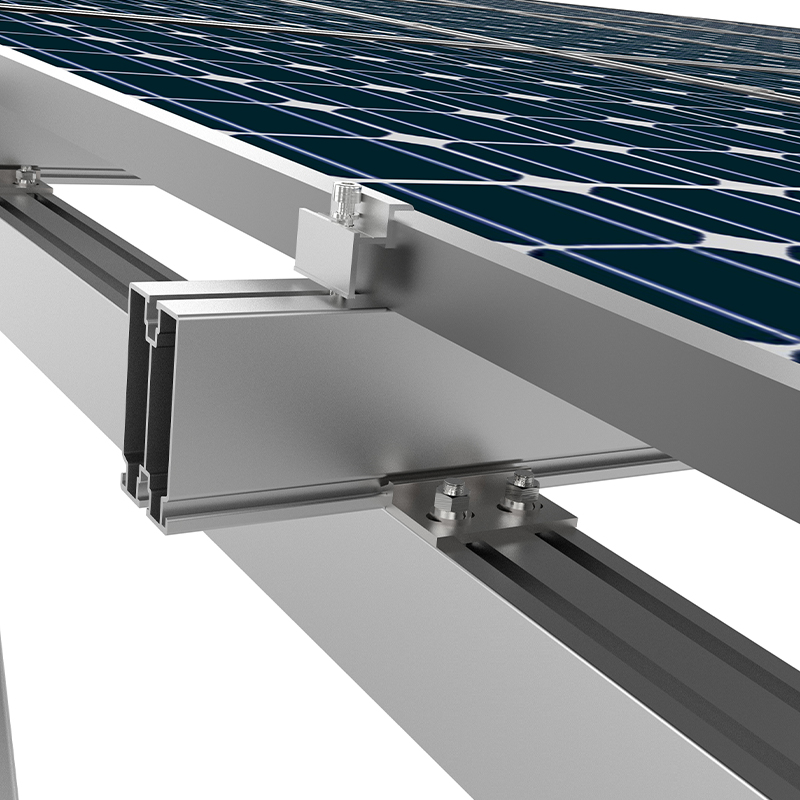 Wholesale Carport PV Mounting Factory, Manufacturers - Taizhou Dongsheng New EneTaizhou Dongsheng New Energy Technology Co., Ltd is China wholesale Carport PV Mounting manufacturers and Carport PV Mounting factory, de...View Product →
Materials and Corrosion Protection
Most brackets are aluminum alloy or galvanized steel. Aluminum is light, easy to handle, and resistant to corrosion, making it the usual choice for rooftops. Hot-dip galvanized steel is heavier and often more economical for ground piles where strength per unit cost matters.
| Material | Key Properties | Recommended Use |
|---|---|---|
| Anodized aluminum (6005-T5) | Lightweight, good corrosion resistance, low maintenance | Rooftop rails, clamps, and residential/commercial mounts |
| Hot-dip galvanized steel | High strength, low initial cost when zinc coating is thick | Ground racks, utility-scale projects, driven piles |
| Stainless steel fasteners | Rust resistant at cut edges and contact points | Bolts, washers, and clamps around the module frame |
The real risk is galvanic corrosion where aluminum and steel touch. Use the correct isolating washer, keep the galvanized coating thick in coastal areas, and do not use untreated carbon steel anywhere moisture can collect. Check that the mill certificate lists the alloy, zinc coating weight, and anodizing thickness before delivery.
How to Select the Right Solar Panel Mounting Bracket
Selecting a bracket is about matching the tested capacity to the actual structure, not choosing the cheapest rail. A practical order of operations is:
- Confirm the mounting surface: roof covering, slope, substrate, or soil condition for ground mounts.
- Check the module dimensions and clamp zones; glass-glass modules usually require clamps on the long side with a specified frame contact area.
- Calculate wind uplift and snow load from the local building code, using ASCE 7, EN 1991, or the applicable national standard.
- Compare the manufacturer's load table for the required rail span, bracket spacing, and fastener schedule.
- Plan for maintenance access, cleaning equipment, thermal expansion, and grounding connections.
Two details are often missed. First, the rafter or pile must be strong enough for the bracket load even if the bracket itself is certified. Second, flashing, grounding lugs, and fasteners are part of the system; if they are missing from the quotation, the installation will stop at the most inconvenient moment.
For a step-by-step example on a house or small commercial roof, a complete roof mounting system guide can help you compare the same variables before ordering.
Installation and Maintenance Mistakes to Avoid
Bracket failures rarely appear during installation; they appear after a few seasons. The most common causes are:
- Over-tightening clamps until the module frame deforms; tighten only to the torque listed by the bracket manufacturer.
- Using galvanized bolts with aluminum rails without isolating washers; galvanic corrosion will follow.
- Sealing only the top edge of a roof hook; water runs sideways under the membrane.
- Leaving no thermal expansion gap; long rails can push against end clamps and buckle the panel.
- Skipping grounding bonds because anodized rails do not conduct reliably through their coating.
Maintenance is simple: inspect fasteners after extreme weather, clear debris from flashing, and re-torque clamps only if the manufacturer allows it. A rust spot on a cut edge is not necessarily a material failure; it may mean the edge coating was damaged during cutting.
Why Work with a Mounting System Manufacturer
A bracket is a structural component, not an accessory. A manufacturer with design support can check rail span, pile depth, and roof flashing before you order. That reduces procurement risk more than a catchy brand name.
At the project level, a supplier such as Suneast New Energy can provide project-specific drawings for flat roof, pitched roof, ground, carport, and agrivoltaic installations. Ask for the load test report, material certificate, and complete fastener list before ordering. In plain language, a good supplier explains why a particular bracket fits the site, not just what the price is.
Choose a solar panel mounting bracket by surface type, verified load path, and corrosion resistance. Those three decisions prevent most roof leaks, loose panels, and warranty disputes.
Message Us Now !

 +86-0523-80509588

 11th Floor, Wenchuang Building, 60 Fenghuang East Road, Hailing District, Taizhou City, JiangSu, China
Mounting Systems
Copyright © Taizhou Suneast New Energy Technology Co., Ltd.
All Rights Reserved.
 OEM/ODM Solar Panel Mounting Bracket Manufacturers