English
 日本語
日本語 Deutsch
 عربى
عربى 中文
中文

Roof PV Mounting Systems: How to Choose the Right Support for Your Solar Project
 2026.08.27
 Industry News
Planning a rooftop solar installation starts with a question: what actually holds the panels up after the installers leave? In a 500 kW commercial project I have seen, the original racking design was changed halfway through because the roof membrane could not accept the specified penetrating attachments. The contractor had to re-engineer the ballast layout and recalculate roof loads. The lesson is simple: the roof PV mounting system is not an accessory. It is the structural layer that determines safety, waterproofing, and long-term performance.
The right choice depends on roof type, load requirements, material compatibility, and installation method. This article walks through the components, the roof-specific options, and the factors you need to evaluate before buying.
What Makes a Roof PV Mounting System Work?
Roof PV mounting systems are built from a few standard parts. These components work together to hold the modules at the correct angle while transferring loads to the building structure. The three primary components are roof attachments, mounting rails, and module clamps. Roof attachments are the anchors or brackets that connect to the roof. Mounting rails run horizontally or vertically to create a support plane. Module clamps fasten the solar modules to the rails.
- Roof attachments: anchors, hooks, or ballast frames that secure the racking to the roof.
- Mounting rails: structural profiles that create a stable support plane for the panels.
- Module clamps: hardware that grips the module frame and fastens it to the rails.
- Flashing and seals: components that stop water ingress at penetration points.
Beyond these, every roof penetration needs a waterproof flashing. The quality of the flashing determines whether the roof stays dry over 20 years. Corrosion resistance also matters. Most roof systems are made from aluminum alloy or hot-dip galvanized steel. Aluminum is lightweight and naturally resistant to rust, but it costs more. Galvanized steel is strong and economical, but the coating can be damaged during installation. If the steel is exposed to water, rust can weaken the structure and stain the roof.
Choosing the Right Racking System for Your Roof Type
Flat Roofs
Flat roofs are common for commercial and industrial buildings. They often have a concrete deck covered by a single-ply membrane. There are two main mounting approaches: penetrating and non-penetrating. Penetrating systems bolt into the deck and require careful sealing. Non-penetrating systems use ballast weights to hold down the racking, so there are no roof penetrations. Non-penetrating is often preferred when the roof deck is in good condition and there is enough load capacity. Our non-penetrating flat roof PV mounting system keeps the membrane intact while providing stable support for the array. It also simplifies the installation process because you do not need to cut into the roof.
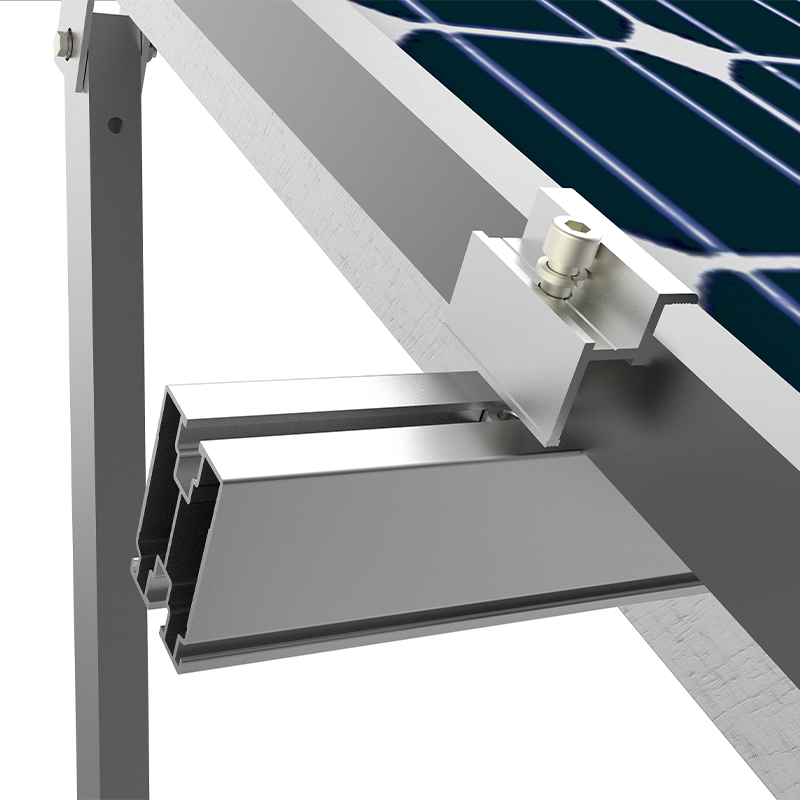 Non-Penetrating Flat Roof PV Mounting System with Concrete BallastDesigned for concrete flat roofs, this system uses prefabricated weights to avoid drilling, protecting the waterproof membrane. It offers 10-30° tilt adjustment, suits double-glass and lightweight panels, and ensures quick installation with low maintenance.View Product →
Metal Roofs
Metal roofs come in standing seam, trapezoidal, and corrugated profiles. The attachment method depends on the profile. For standing seam, clamps can be mounted onto the seam without drilling. For trapezoidal or corrugated sheets, brackets are usually fastened into the top of the ribs. You should never fasten directly through the flat area of a metal roofing sheet, because that can cause leaks and rust. The metal roof PV mounting system uses rib-specific brackets and compatible hardware to avoid damaging the sheet. It also maintains a gap between the roof and the panels for airflow and easy maintenance.
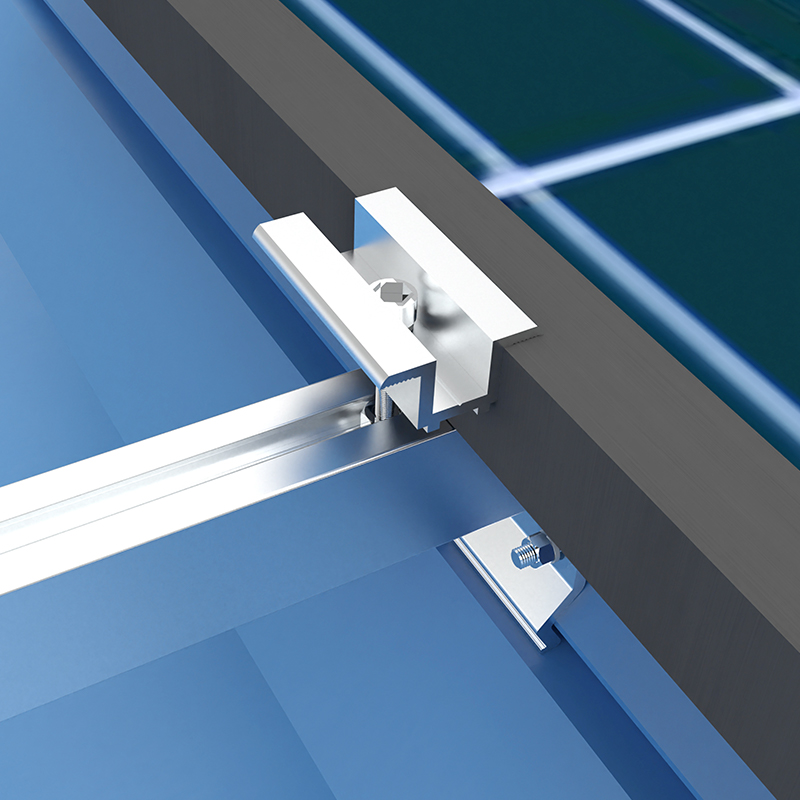 Clamp-Type Non-Penetrating Metal Roof PV Mounting SystemFor trapezoidal and standing seam metal roofs, this system mounts with clamps to avoid drilling, preserving the roof's anti-corrosion layer. It fits various profiles, adjusts to different tilts, and is ideal for large industrial and commercial buildings.View Product →
Tile Roofs
Tile roofs are popular in residential and some commercial projects. They are fragile, so installers must work carefully. Standard practice is to remove the tile at the attachment point, install a hook, and then slide the tile back into place. The hook must be adjustable to accommodate different tile profiles and rail heights. The tile roof PV mounting system is designed with adjustable hooks and a wide base to distribute pressure, reducing the risk of cracked or broken tiles.
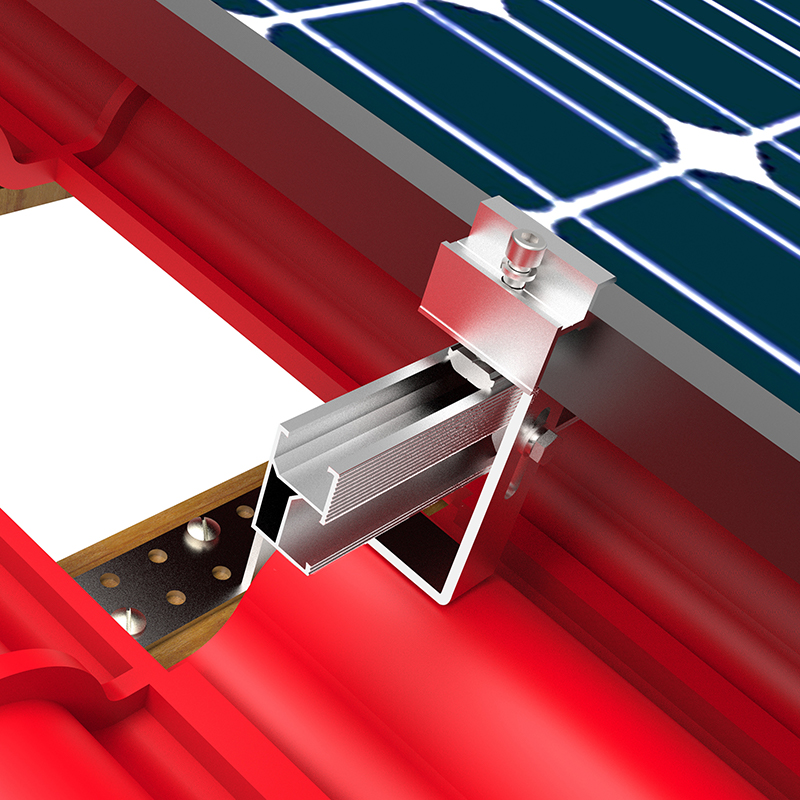 Adjustable Tile Roof PV Mounting System for Ceramic and SlateBuilt for ceramic, cement, and slate tiles, this mounting system uses adjustable hooks and a wide base to distribute weight, reducing tile damage. It is compatible with different slopes and profiles, ensuring secure installation without leaks.View Product →
TPO Roofs
TPO roofs are flexible membranes commonly used on flat or low-slope roofs. They expand and contract with temperature, so any penetration needs to be sealed with a compression fitting and a flashing that can move with the membrane. However, many installers prefer non-penetrating systems on TPO. If the membrane is aged or brittle, fasteners can create stress points. Before installing on TPO, confirm the membrane type, age, and warranty requirements with the manufacturer.
Key Factors to Consider Before You Buy
When comparing roof PV mounting systems, here are the most important factors to evaluate.
- Wind and snow loads: calculate based on local building codes and project location.
- Corrosion resistance: choose aluminum or hot-dip galvanized steel with proper surface treatment.
- Roof condition: inspect for existing damage, aging, or water ponding before installation.
- Clearance and ventilation: maintain a minimum gap between the roof and the modules to allow airflow and keep operating temperatures lower.
- Compatibility: ensure clamps and rails fit the module frame dimensions and orientation.
| Roof Type | Typical Mounting Approach | Main Risk | What to Check |
|---|---|---|---|
| Flat roof | Ballasted / non-penetrating or penetrating | Membrane damage or ponding | Roof load capacity, row spacing |
| Metal roof | Seam clamps or rib brackets | Corrosion around fasteners | Seam type, coating, fastener compatibility |
| Tile roof | Tile hooks or replacement tiles | Tile cracking or leaks | Tile profile, hook shape, rail spacing |
| TPO roof | Non-penetrating or sealed penetrations | Membrane shrinkage and leaks | Membrane age, attachment approval |
Installation Tips and Common Pitfalls
Roof mounting is where most problems appear if the system is not designed correctly. Here are five pitfalls to avoid.
- Overtightening clamps: Torque specification matters. Excessive torque can warp module frames and cause microcracks, reducing power output.
- Ignoring thermal expansion: Rails and panels expand when hot. Leave proper clearance around fasteners so the system can move without loosening.
- Using the wrong flashing: General-purpose flashing cannot replace roof-specific flashing. Each roof type needs a seal that matches its attachment and materials.
- Concentrating loads: Storing modules or ballast in one spot can exceed the roof's local capacity. Spread the weight across the roof.
- Skipping a site survey: A structurally intact roof is not enough; you must look for existing rust, moisture, and roof condition before mounting.
A reputable supplier should offer installation guidance, drawings, and sometimes on-site support. After installation, periodic checks can detect loose clamps or corrosion before they become serious problems.
Choosing the right roof PV mounting system is a decision that touches structural safety, waterproofing, and project economics. Start with a clear understanding of your roof, then match the system to its constraints. For a detailed walkthrough of the design and installation steps, see our complete guide to designing and installing roof PV mounting systems. With the right racking in place, your solar project can operate safely and efficiently for decades.
Message Us Now !

 +86-0523-80509588

 11th Floor, Wenchuang Building, 60 Fenghuang East Road, Hailing District, Taizhou City, JiangSu, China
Mounting Systems
Copyright © Taizhou Suneast New Energy Technology Co., Ltd.
All Rights Reserved.
 OEM/ODM Solar Panel Mounting Bracket Manufacturers