English
 日本語
日本語 Deutsch
 عربى
عربى 中文
中文

How to Choose Solar Mounting Brackets: A Buyer's Guide for PV Projects
 2026.10.01
 Industry News
A 3.2 MW rooftop array near the coast passed its final inspection in calm weather. Eleven months later, it needed repairs: white corrosion powder covered the rail ends, a dozen mid-clamps had loosened after two typhoons, and the modules had started to shift in their seats. The brackets had been chosen mainly on price, saving the developer about 0.01 USD per watt but creating rework costs that wiped out the saving.
The takeaway is straightforward: solar mounting brackets are the smallest high-stress components in a PV plant, and they deserve the same engineering attention as modules and inverters. This guide covers what determines bracket quality, how to match brackets to roof, ground, and special applications, and the procurement checks that prevent field failures.
What Makes a Solar Mounting Bracket Reliable
Bracket reliability comes down to material grade, surface protection, and structural design. Aluminum extrusions in 6005-T5 or 6063-T5 are the industry standard for rails, clamps, and roof frames because they combine strength, corrosion resistance, and light weight. Fasteners should be stainless steel: grade 304 for most sites, grade 316 for coastal or chemical environments. Steel ground piles, in turn, are normally hot-dip galvanized to 70 to 85 microns per ISO 1461.
Surface protection decides how long the structure keeps its strength. Anodized aluminum at 15 microns (AA15) handles normal weathering; coastal air calls for thicker anodizing or special coatings. When a supplier says 'corrosion-resistant', ask for the salt spray test hours and the coating standard. A capable bracket passes 720 to 1,000 hours of neutral salt spray testing without significant surface breakdown.
On the structural side, follow the load path. Wind, snow, and thermal forces travel from the module through clamps into rails, then through the bracket into the building or foundation. Clamps must grip the module frame, typically 30 to 42 mm thick, at the torque range the manufacturer specifies, usually 18 to 25 Nm. Deep-section rails carry higher bending loads. Those details are not visible in a brochure, but they appear in the drawing set and the mechanical test report.
Roof Mounting Brackets: Match the Design to the Roof Type
Roof brackets are not interchangeable. The right system depends on the roof covering, the structural deck, and whether the waterproofing can be penetrated.
Flat Roofs: Non-Penetrating versus Penetrating
For flat roofs, non-penetrating (ballasted) systems are the default on commercial buildings with TPO, EPDM, or PVC membranes. They use concrete ballast to hold the array down and distribute the load through support pads, so there are no holes in the membrane and the roof warranty stays intact. The trade-off is added dead load, which must be checked against the roof structure.
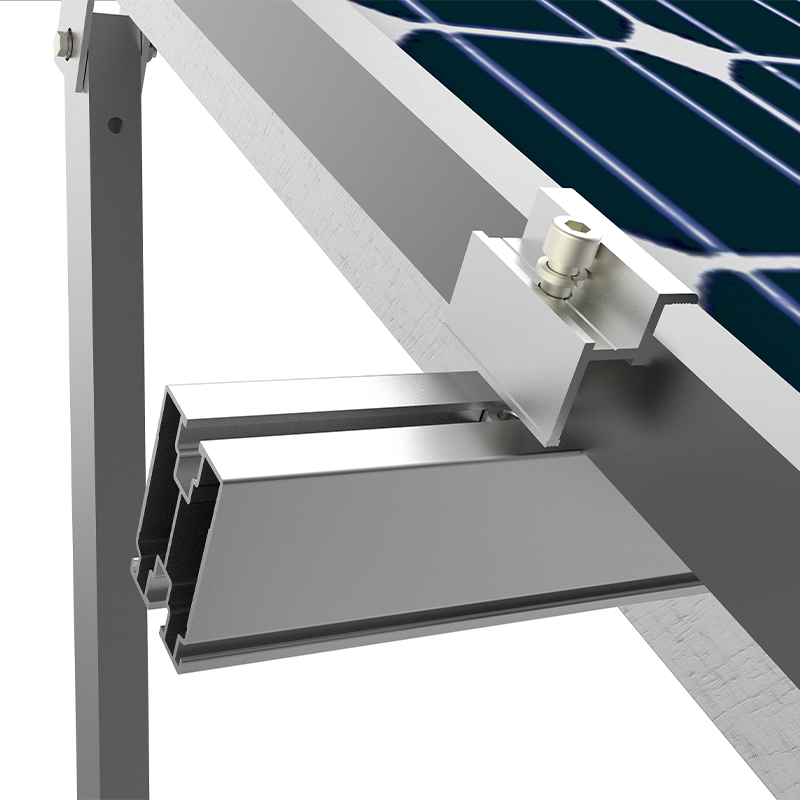 Ballasted Non-Penetrating Mounting for Flat Concrete RoofsThis mounting system uses concrete counterweights to hold solar panels without penetrating the roof membrane. It allows tilt adjustment for better sunlight capture while preserving the roof warranty on commercial buildings.View Product →
Penetrating flat-roof systems anchor through the membrane into the concrete deck. They make sense in high wind zones where uplift exceeds what ballast can reasonably resist, and on roofs with limited spare load capacity. Every penetration is a potential leak, so flashing details and membrane compatibility matter. A detailed roof PV mounting design guide can help you compare both approaches before committing.
Pitched Roofs: Metal, Tile, and TPO
On standing-seam metal roofs, clamps attach to the seam without drilling. On trapezoidal metal roofs, brackets are screwed into the purlins with sealing washers, so screw quality determines long-term weathertightness. On tile roofs, hooks slide under or replace tiles and anchor to the rafters, with height adjusted to the tile profile. For TPO roofs, adhered or thermally welded plates avoid membrane punctures entirely.
Before approving any roof bracket, check three numbers: the roof's allowable load, the uplift pressure for the building height and wind zone, and the module frame width the clamp must accept.
Ground Mounting Brackets for Flat Terrain and Special Surfaces
Ground mounts face a different load and foundation environment. On level terrain, driven piles or ground screws support fixed-tilt frames, and galvanized steel is the most economical choice. The critical inputs are soil condition, pile depth, and the local corrosion class.
Agrivoltaic brackets take this further by raising the array so crops and machinery can pass underneath, which increases column heights, beam sizes, and foundation cost. A sound agricultural hybrid system starts from a structural calculation that includes the crop clearance height, wind exposure, and the extra load of cables and monitoring equipment.
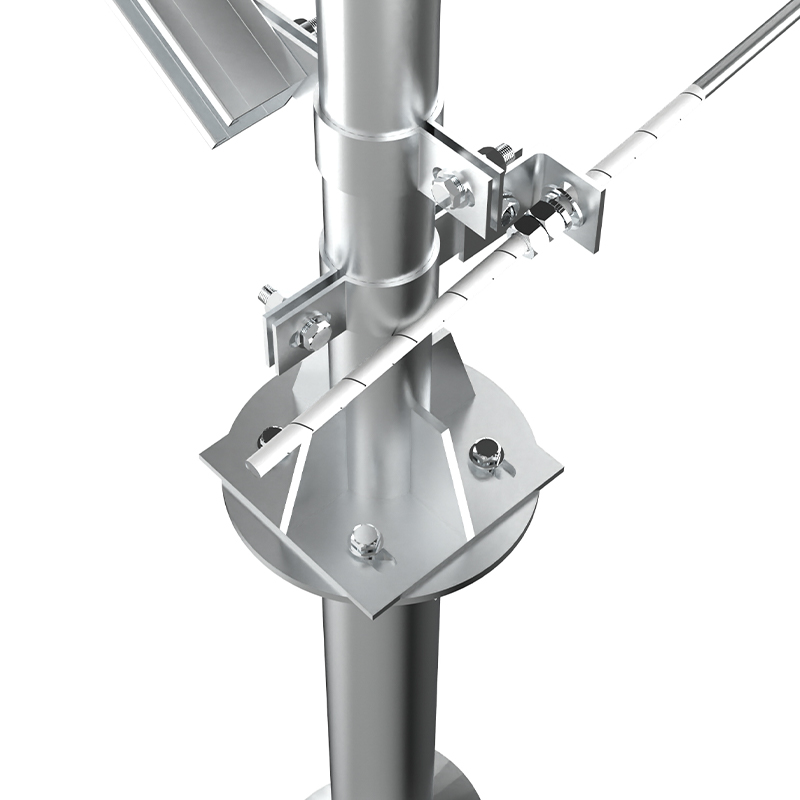 High-Clearance Agrivoltaic Mounting for Dual Land UseDesigned for photovoltaic plus agriculture, this elevated bracket raises panels several meters to allow crop growth and machinery passage. Its galvanized steel structure and pile foundations suit farmland and sloping terrain.View Product →
Wet and hilly sites push the design even further. Fishery and water-surface arrays demand corrosion protection above the water line, with stainless steel fasteners as a minimum. Mountain installations need adaptability: modular single-column and double-column brackets absorb large height differences along a slope without site welding. When terrain slopes exceed 20 degrees, the bracket must allow field adjustment of both the horizontal and vertical angles.
Special Applications: BIPV, Balcony, and Carport Brackets
BIPV brackets do double duty: they support the modules and form the weather envelope. Every joint needs a waterproof detail, typically an EPDM gasket or a sealed overlap, on top of the structural connection. Carbon steel BIPV systems suit large industrial roofs; aluminum alloy systems are lighter and easier to handle on mid-rise buildings. Both must be validated for wind-driven rain because the space underneath is occupied.
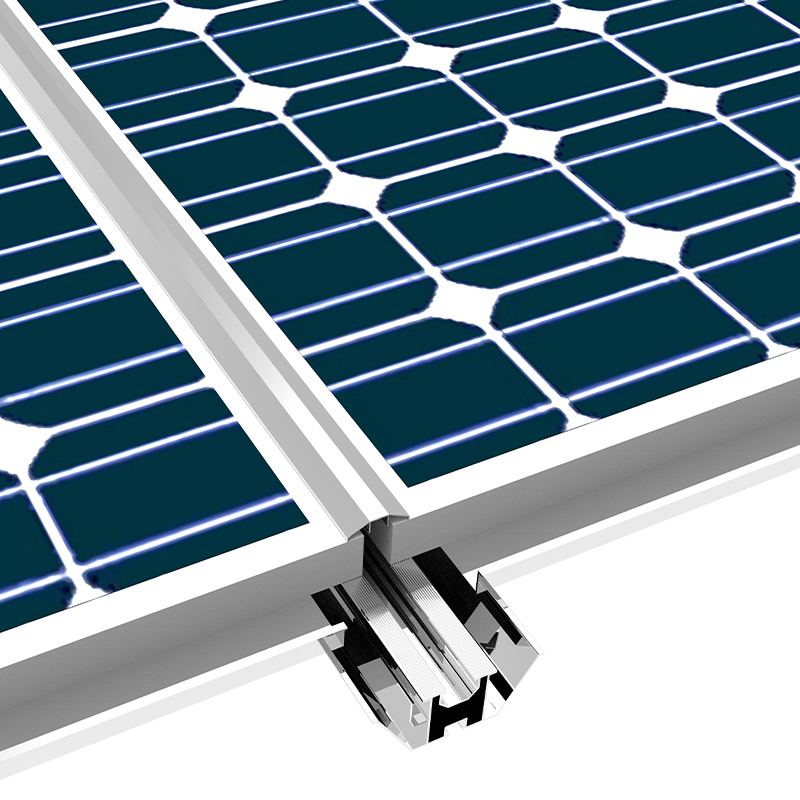 W-Shaped Aluminum Waterproof PV Mounting BracketThis aluminum bracket uses a W-shaped profile with integrated drainage and sealing strips to prevent water leakage. It is lightweight and corrosion-resistant, suitable for humid, coastal, or rainy rooftop installations.View Product →
Balcony brackets are the newest category. They are compact, lightweight, and built for quick assembly, usually carrying one or two modules. Their main challenge is wind stability: the mounting surface is small, the height creates leverage, and people live nearby, so the bracket must resist both uplift and sliding.
Carport brackets are structural frames spanning multiple parking bays. They carry the same loads as ground mounts, plus clear-height, drainage, and aesthetic requirements. For any special application, check whether the manufacturer tested the complete assembly, including joints and fasteners, for the relevant loads and environment.
Bracket Materials and Finishes at a Glance
Material choice drives both the purchase price and the 25-year maintenance cost. The table below summarizes the common options.
| Component | Material | Finish | Best Suited For | Relative Cost |
|---|---|---|---|---|
| Rails and clamps | Aluminum 6005-T5 or 6063-T5 | Anodized 15 microns | Roof, carport, BIPV | Medium |
| Bolts, washers, nuts | Stainless steel 304 or 316 | Passivated | All sites; 316 for coastal and chemical | High per part, low in total |
| Ground piles and large frames | Structural steel | Hot-dip galvanized 70 to 85 microns | Ground, agricultural, fishery | Low to medium |
| Waterproof BIPV frames | Carbon steel or aluminum alloy | Galvanized plus paint, or anodized with EPDM seals | Building-integrated roofs | Medium to high |
A practical rule: if the site is within 3 km of the coastline, or in an industrial area with aggressive air, move every fastener to stainless steel and ask for a corrosion warranty on the aluminum finish.
Wind, Snow, and Seismic Loads: The Engineering Behind the Bracket
A tilted module behaves like a sail. Wind creates both downward pressure and upward suction, and in most regions the uplift case controls the bracket design. Codes such as ASCE 7-22, EN 1991-1-4, and GB 50009 provide the wind speed maps and pressure coefficients. Inputs include the site wind speed, exposure category, array height, terrain roughness, and tilt angle. For large ground arrays, wind tunnel testing per ASCE 49 can reduce the ballast or pile length needed.
What you should expect from a bracket supplier:
- A project-specific structural report for your wind zone, not a generic brochure chart.
- Load combinations with the correct safety factors for uplift, overturning, and sliding under the applicable local code.
- Snow and seismic checks where the project climate requires them.
- Test results for the joints and clamps, not just the aluminum profile.
If those documents are missing, the risk lands on you during permitting and again during any future dispute.
Procurement Risks to Put on Your Checklist
Most bracket failures come from overlooked details. Work through this checklist before ordering:
- Material certificates. Verify alloy and steel grades; mixing incompatible materials creates galvanic corrosion at connection points.
- Salt spray data. For coastal sites, require at least 720 hours of neutral salt spray testing for anodized aluminum and a written coating standard for steel.
- Clamp compatibility. Confirm the clamp range fits your module frame width; an incorrect clamp causes field rework and a module slip risk.
- Torque and tooling. If a system needs special bits or calibrated tools for every clamp, expect higher labor cost and more errors.
- Packaging and loading. Brackets ship as long extrusions; broken profiles and missing small parts are the most common supply complaints.
- Engineering support. Installation drawings, structural calculations, and responsive technical assistance are part of the product.
Working with a supplier whose range covers the whole project also reduces interface risk. Suneast New Energy, for example, publishes its full solar PV mounting system catalog online, so a buyer can verify that one manufacturer supplies roof, ground, agricultural, fishery, BIPV, and balcony systems under a single engineering responsibility.
The Bracket Decision Is a Structural Decision
Mounting brackets are a small line item and a permanent structure. A weaker clamp or a thinner coating shows up years later as loose modules, corrosion stains, and expensive arguments. Select the bracket the way you would select a foundation: verify the material, check the coating, request site-specific load calculations, and choose a supplier with engineering support. When the wind arrives, the bracket is the only thing holding the production in place.
Message Us Now !

 +86-0523-80509588

 11th Floor, Wenchuang Building, 60 Fenghuang East Road, Hailing District, Taizhou City, JiangSu, China
Mounting Systems
Copyright © Taizhou Suneast New Energy Technology Co., Ltd.
All Rights Reserved.
 OEM/ODM Solar Panel Mounting Bracket Manufacturers