English
 日本語
日本語 Deutsch
 عربى
عربى 中文
中文

How to Choose BIPV Manufacturers: Structural, Waterproofing, and Cost Criteria
 2026.09.17
 Industry News
Water stains appeared on the ceiling of a commercial building seven months after a BIPV installation was completed. The solar panels were still producing to specification, but water had found a path along a poorly detailed mounting rail. That detail is the difference between a true building-integrated photovoltaic product and a solar array that simply sits on the roof.
Project teams evaluating BIPV manufacturers should look past peak module efficiency and compare how each supplier handles the building envelope: waterproofing, structural movement, material compatibility, and installation quality. The selection is not about solar panels alone.
What a BIPV Manufacturer Actually Supplies
BIPV is not a single product. At a minimum, a building-integrated PV system includes photovoltaic modules, electrical connections, structural support profiles, and a weather barrier. The "integration" in the name refers to how these elements combine into the building skin.
Manufacturers can be grouped by what they control:
- PV module manufacturers provide laminates or framed panels designed for BIPV. They set cell layout, electrical data, and often the visual appearance.
- Building envelope companies contribute roof or façade profiles, flashings, insulation, and glazing. Their strength is the envelope, but they may not have deep PV experience.
- Specialized PV mounting manufacturers design the rails, brackets, waterproofing profiles, and clamps that join the module to the structure. They usually work with standard modules and can supply project-specific engineering.
For a building owner, the practical question is who is accountable for the complete wall or roof assembly. If a module supplier is chosen without specifying the substructure, waterproofing and structural performance can fall into the gap between two contracts.
One way to reduce that gap is to source modules and mounting systems from partners who have already defined the interface. Companies such as Suneast New Energy publish load tables and installation guidance for their mounting frameworks.
Why the Mounting System Defines Failure Risk
Most early BIPV failures are not caused by cell degradation. They come from water ingress, corrosion at cut edges, fastener loosening under thermal cycling, or condensation inside a closed cavity. The mounting system is the layer that must keep water outside while allowing the PV module to expand, contract, and ventilate.
| Supplier type | Typical scope | Waterproofing control | Best suited for |
|---|---|---|---|
| PV module manufacturer | Laminates and framed modules | Usually limited to module frame and junction box | Projects where a separate building envelope system already exists |
| Building envelope manufacturer | Roof or façade panels with integrated PV | High, because the building skin is the product | New construction and full roof replacement |
| Specialized PV mounting manufacturer | Rails, clamps, waterproof profiles, and installation guides | High, if the profile system is tested for rainwater runoff | Retrofit projects and custom roof geometries |
A specialized mounting manufacturer cannot replace the module maker's electrical warranty, but it can provide the waterproofing and structural engineering that keeps the installation weathertight. When the BIPV architecture uses a separate waterproofing profile, the mounting manufacturer's drawings become the key reference for the roof contractor.
For industrial low-slope roofs, many installers compare carbon steel waterproof BIPV mounting profiles because the material can span longer distances and support higher wind loads.
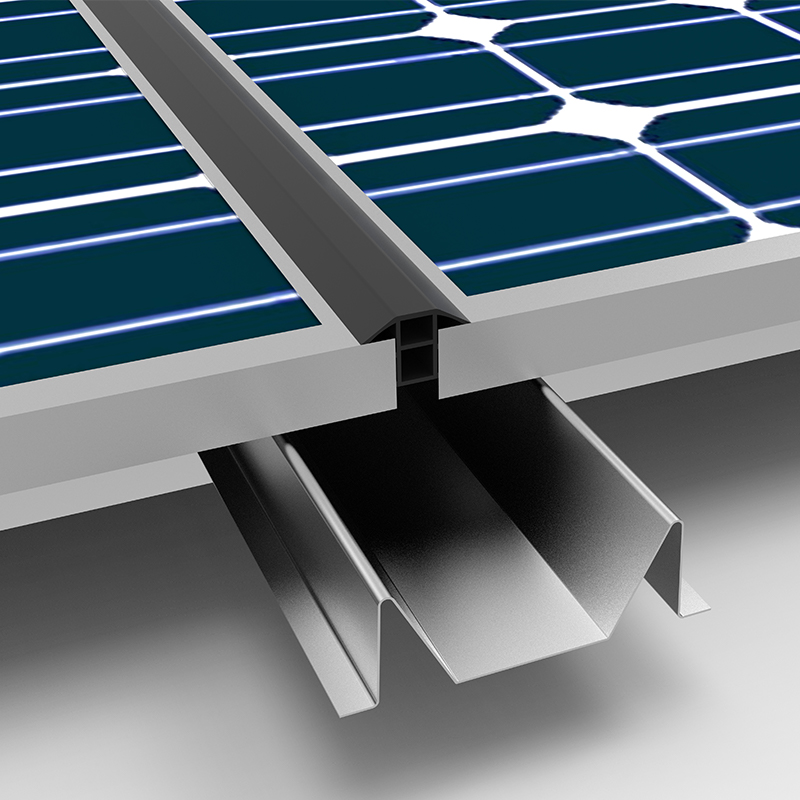 M-type Carbon Steel Waterproof PV Mounting for Industrial RoofsThis steel-based waterproof mounting system suits low-slope industrial roofs needing long spans and high wind resistance. Its M-shaped profile and sealed design address both structural and leakage concerns, making it a practical option before specifying BIPV.View Product →
Key Evaluation Criteria for BIPV Manufacturers
When a supplier says they can deliver BIPV, verify six things before putting the system on a drawing.
- Waterproofing method: Does the system depend on sealant alone, or does it use interlocking profiles, gaskets, and drip edges? Sealant-only junctions age quickly.
- Load data: Request wind uplift and snow load ratings. Ask whether they come from finite element analysis, physical testing, or codes.
- Material protection: For steel, what coating system is used and how are cut edges treated? For aluminum, how are galvanic contacts isolated from steel fasteners?
- Thermal movement: What is the allowable module size and clamp spacing? Are there sliding connections for long runs?
- Installation sequencing: How many roof penetrations are required? Can a single module be replaced without dismantling a large section?
- Documentation and support: Are the drawings signed by an engineer? Will the supplier provide installation training and as-built documentation?
These questions separate suppliers with real field experience from those that only supply hardware.
Compare Material Choices Before You Shortlist
BIPV mounting profiles are commonly made from carbon steel or aluminum alloy. Neither is universally better; the choice depends on roof load, corrosion environment, and cost.
| Property | Carbon steel | Aluminum alloy |
|---|---|---|
| Strength-to-weight | High strength; heavier sections | Lighter; more profiles may be needed for the same load |
| Corrosion resistance | Depends on coating; cut edges need treatment | Naturally corrosion-resistant; still avoid galvanic contact |
| Cost | Lower material cost | Higher material cost |
| Typical use | Industrial flat roofs, large spans, heavy snow load | Retrofit profiles, coastal environments, curved or lightweight roofs |
Aluminum profiles are often selected when the main limit is the weight the existing roof structure can carry. The aluminum alloy waterproof BIPV mounting system is a common choice for metal roofs and façade-integrated solar because the lightweight profiles are easier to align with the building grid.
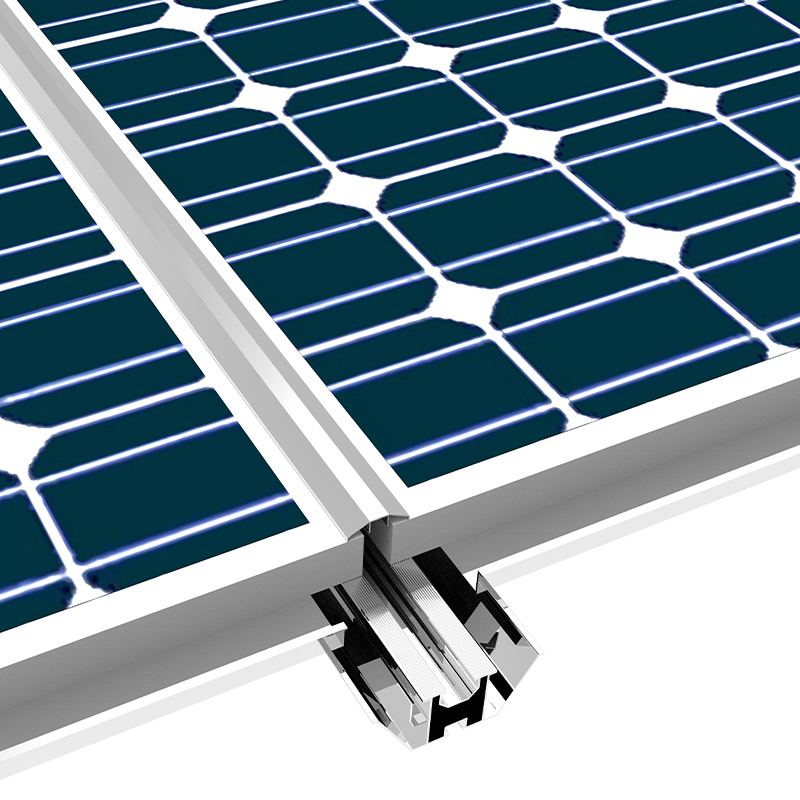 W-type Aluminum Alloy Waterproof PV Mounting for Weight-Sensitive RoofsA lightweight aluminum alternative for metal roofs where existing structure limits weight. Its W-shaped profile integrates drainage and sealing, offering corrosion resistance and tool-free assembly—especially relevant when comparing BIPV options and checking warning signs.View Product →
Red Flags in BIPV Proposals
Although technical documents vary, certain warning signs regularly appear in weak BIPV offers.
- No load tables, or only a generic span chart that does not match the project geometry.
- Waterproofing described as "apply sealant to all joints" without interlocking profiles or integrated gutters.
- No clear corrosion protection for steel profiles after cutting, drilling, or field modification.
- A warranty that covers module output but excludes watertightness of the assembly.
- No installation training or site support, despite the fact that BIPV installation tolerances are stricter than standard roof solar.
A supplier that controls mounting design and provides installation guidance can reduce the gap between engineering drawings and roof work. Suneast's experience in PV racking and green building development is one example of how support is integrated into the product range.
How to Shortlist a BIPV Manufacturer
Start by defining the building type, roof slope, module size, and the responsible party for the weather barrier. Then compare manufacturers using a simple filter.
- Choose the BIPV product category that matches the envelope: roof-integrated, façade, or canopy.
- Request load calculations and rainwater management details in the first enquiry.
- Check that the manufacturer offers a complete system, including flashings, end caps, clamping profiles, and replacement parts.
- Compare installed cost, not only profile cost. A small price difference per kilogram becomes small when you add accessories, labor, and risk.
- Ask for references from projects with a similar roof shape and climate.
Selecting BIPV manufacturers starts with an honest definition of scope. If your project is a complete envelope replacement, the lead manufacturer should own both the structure and the weather barrier. If you are retrofitting solar onto a sound existing roof, a specialized mounting supplier may be the strongest point of control. In both cases, the decision should rest on load data, waterproofing details, corrosion protection, and installation support before a single module is specified.
Message Us Now !

 +86-0523-80509588

 11th Floor, Wenchuang Building, 60 Fenghuang East Road, Hailing District, Taizhou City, JiangSu, China
Mounting Systems
Copyright © Taizhou Suneast New Energy Technology Co., Ltd.
All Rights Reserved.
 OEM/ODM Solar Panel Mounting Bracket Manufacturers