English
 日本語
日本語 Deutsch
 عربى
عربى 中文
中文

Is the balcony PV mounting system compatible with different sizes and types of photovoltaic modules?
 2026.01.01
 Industry News
General compatibility considerations for balcony-mounted photovoltaic systems
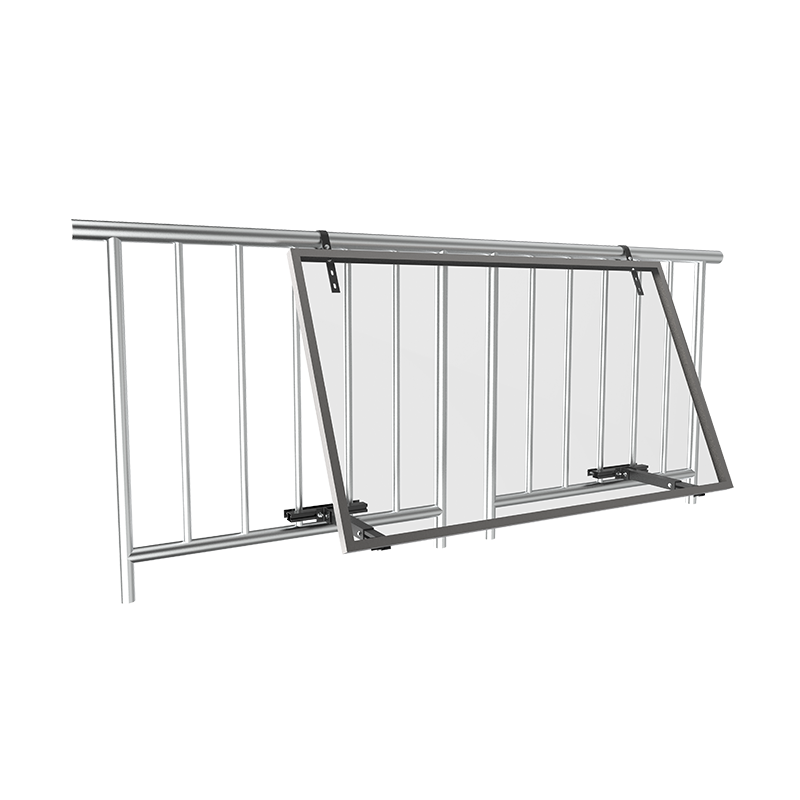
The question of whether a balcony photovoltaic mounting solution can accommodate different sizes and types of photovoltaic modules is closely linked to structural design, adjustability, and installation standards. A balcony solar mounting system is typically developed to operate within limited space while meeting safety and load requirements. Because balconies vary widely in railing style, depth, and load-bearing capacity, compatibility with photovoltaic modules depends not only on module dimensions but also on how flexibly the mounting structure can be adjusted during installation.
Variation in photovoltaic module dimensions and formats
Photovoltaic modules are produced in a wide range of sizes and formats, influenced by cell technology, power rating, and intended application. Standard residential modules often differ in length, width, and thickness from compact or lightweight modules designed for distributed installations. A balcony solar mounting system must take these variations into account by offering adaptable clamping ranges and support rails that can accommodate common module footprints without requiring custom fabrication.
Structural design principles of balcony mounting systems
The structural framework of a balcony-mounted system generally consists of brackets, rails, and fastening components that connect the photovoltaic module to the balcony railing or floor. Compatibility is largely determined by whether these components allow positional adjustment along multiple axes. Systems designed with slotted rails or movable clamps are more likely to support different module sizes because installers can fine-tune spacing and alignment according to the module’s outer dimensions.
Compatibility with framed photovoltaic modules
Framed photovoltaic modules are among the most commonly used types in balcony installations. These modules typically feature aluminum frames with standardized thickness ranges. Most balcony solar mounting system designs are developed with framed modules in mind, using mid-clamps and end-clamps that grip the frame edges. As long as the clamp range matches the frame thickness, compatibility is usually achievable across different power ratings and panel sizes.
Considerations for frameless photovoltaic modules
Frameless photovoltaic modules present additional challenges for balcony installations. Without a rigid frame, these modules require specialized clamping or support methods to avoid stress concentration and edge damage. Not all balcony-mounted systems are suitable for frameless modules, and compatibility depends on whether the system includes dedicated glass clamps or continuous support rails. In many cases, the mounting system must be specifically rated for frameless module use to ensure safe load distribution.
Influence of module weight on system compatibility
Module weight is a critical factor when evaluating compatibility with a balcony-mounted system. Balconies are often subject to stricter load limits than rooftops or ground-mounted installations. While a balcony solar mounting system may be adjustable for different module sizes, heavier modules can exceed allowable loads when combined with mounting hardware and environmental forces. Compatibility assessments therefore consider both physical fit and weight constraints to ensure safe operation.
Adjustability of mounting rails and clamp spacing
One of the main indicators of compatibility is the adjustability of mounting rails and clamp positions. Systems with telescopic rails or multiple pre-drilled slots provide greater flexibility in accommodating varying module lengths. Adjustable clamp spacing allows installers to position clamps at manufacturer-recommended points on the module frame, which supports structural stability and compliance with warranty conditions.
| Mounting Feature | Adjustment Capability | Effect on Module Compatibility |
|---|---|---|
| Slotted mounting rails | Lengthwise adjustment | Supports different module lengths |
| Adjustable clamps | Variable spacing and thickness range | Accommodates different frame profiles |
| Modular brackets | Angle and position adjustment | Improves alignment flexibility |
Compatibility with different photovoltaic technologies
Photovoltaic modules are manufactured using different cell technologies, such as monocrystalline, polycrystalline, and thin-film. From a mechanical standpoint, the main difference lies in module size, weight, and rigidity rather than electrical characteristics. A balcony solar mounting system that is mechanically compatible with a given module size and weight can generally support different cell technologies, provided that installation guidelines are followed.
Impact of module thickness and frame profile
Module thickness and frame profile vary between manufacturers and product series. Some modules use thicker frames for increased rigidity, while others prioritize lighter construction. Mounting systems with narrow clamp ranges may not be compatible with thicker frames. Systems designed with broader tolerance ranges are more adaptable, reducing the need for additional accessories when switching between module types.
Orientation and tilt adjustment for different module sizes
Balcony installations often rely on vertical or slightly inclined mounting orientations. Compatibility with different module sizes is influenced by whether the system allows tilt adjustment without interfering with balcony railings or neighboring structures. Larger modules may require more clearance to achieve the same tilt angle as smaller ones. A balcony solar mounting system with adjustable tilt arms can better accommodate these variations while maintaining consistent exposure conditions.
Standardization and manufacturer guidelines
Manufacturers of both photovoltaic modules and mounting systems provide installation guidelines that define acceptable mounting methods and clamp positions. Compatibility is achieved when the balcony-mounted system aligns with these guidelines. Systems designed according to widely used standards are more likely to support modules from multiple suppliers, reducing restrictions on module selection.
Regional standards and safety requirements
Compatibility is also influenced by regional building codes and safety requirements. Wind load, snow load, and vibration criteria vary by location and affect which module sizes can be safely mounted on a balcony. Even if a balcony solar mounting system can physically support a large module, regulatory limits may restrict its use in certain environments. Compliance with local standards is therefore part of the overall compatibility evaluation.
Installation flexibility in retrofit and new balcony projects
In retrofit projects, existing balcony dimensions and railing structures can limit module choices. Systems that offer multiple attachment options, such as railing clamps or floor-mounted supports, provide greater compatibility with different module sizes. In new construction projects, balconies may be designed with photovoltaic integration in mind, allowing for broader module selection within the same mounting system framework.
Maintenance and replacement considerations
Over the service life of a balcony-mounted photovoltaic installation, module replacement may become necessary due to damage or product updates. A mounting system that supports a wide range of module sizes simplifies replacement, as new modules can be installed without modifying the structure. This long-term flexibility is often considered part of practical compatibility rather than initial fit alone.
| Compatibility Aspect | Relevant Module Parameter | System Design Influence |
|---|---|---|
| Physical fit | Length and width | Rail adjustability and spacing |
| Mechanical support | Weight and rigidity | Bracket strength and load rating |
| Clamping method | Frame thickness or glass edge | Clamp type and tolerance range |
Limitations that may affect universal compatibility
Despite adjustable designs, no single balcony-mounted system can support every photovoltaic module available on the market. Extremely large modules, unusually thick frames, or specialized glass constructions may fall outside the intended use range. Compatibility should therefore be assessed on a case-by-case basis, considering both module specifications and mounting system limits.
Practical evaluation of compatibility during project planning
During project planning, installers and system designers typically compare module datasheets with mounting system specifications to confirm compatibility. This process involves checking allowable clamp ranges, maximum supported dimensions, and load ratings. A balcony solar mounting system that provides clear technical documentation simplifies this evaluation and reduces uncertainty when selecting modules of different sizes and types.
Overall adaptability of balcony photovoltaic mounting solutions
In practice, many modern balcony-mounted photovoltaic systems are developed with adaptability as a core feature. Through adjustable rails, flexible clamps, and modular components, these systems can accommodate a wide range of photovoltaic module sizes and types within defined limits. Compatibility is therefore not an absolute condition but a balance between system design, module characteristics, and installation environment.
Message Us Now !

 +86-0523-80509588

 11th Floor, Wenchuang Building, 60 Fenghuang East Road, Hailing District, Taizhou City, JiangSu, China
Mounting Systems
Copyright © Taizhou Suneast New Energy Technology Co., Ltd.
All Rights Reserved.
 OEM/ODM Solar Panel Mounting Bracket Manufacturers